
Terraso joins the discussion on sustainable landscape management tools and practices at the KenLAP conference
Few experiences are as rewarding as attending an event with high expectations and seeing those expectations exceeded. That was precisely my experience at the inaugural Kenya Landscape Actors Platform (KenLAP) conference, held November 4-8, 2024, in Nairobi, Kenya. KenLAP was formed to unite government agencies, NGOs, private sector entities, and local communities to work together toward more effective sustainable land management, ecosystem restoration, and biodiversity conservation. The conference brought together these landscape actors for four days of cross-sector collaboration, discussions, and presentations on sustainable landscape management tools and practices.
Kenya and KenLAP lie at the heart of our Terraso story. It was here, on the shores of Lake Naivasha in May 2023, that we officially launched Terraso alongside the first KenLAP gathering. Now, a year later, both Terraso and KenLAP are finding their footing, working together to empower landscape actors across the region.
Data in Kenya, especially among farmers and conservationists, has vast potential to catalyze transformation. At the conference, I had the privilege of meeting and interviewing many participants, most coming from conservation backgrounds, and several focused on agricultural and food security data.
Our conversations offered a critical reminder: data is not just bits of information on paper or screens—it represents landscapes, communities, and human lives. It is integral to not just surviving but thriving.
The role of data in landscape management
As I engaged with other attendees, consistent themes emerged. Participants shared how they wanted insights into soil quality, crop resilience, and climate impacts but often lacked the resources to make informed decisions. They also voiced concerns about the most human aspect of data: trust. Data ownership, privacy, and the responsibility to use data ethically were central topics, highlighting that our work isn’t just about technology but about enhancing trust and the bonds between people.
Throughout the conference, it became clear that the Terraso platform, the LandPKS Soil ID App, and the Better Deal for Data project (three active efforts at Tech Matters) all have essential roles in these conversations. Initially, I had planned to observe, listen, and learn from the rich insights the participants would share. But as I listened, I realized how much Terraso and LandPKS could directly support their data and communication needs while the Better Deal for Data could address their concerns around responsible data use. Inspired, I agreed to do a five-minute, impromptu presentation of the Terraso platform and LandPKS Soil ID app, followed by a group interview to delve into the data needs and challenges the communities faced.
While the demonstration was short, it was enough to spark the interest of the other conference attendees, who were excited and motivated by the idea of a simple and easy tool for data sharing, visualization, and storytelling. I was approached afterwards by numerous participants asking for more in-depth demos, and post-conference video calls for them to learn more about how to incorporate the Terraso platform into their work routines. What really stood out to them was the ease of use: for example, no training was required to get started immediately with Terraso Story Maps (our open source tool for creating online stories with data, images, text, and maps) and create an engaging and interactive presentation without hours of effort.
This feedback and excitement left me feeling energized, but it was nothing compared to the gathering I hosted after the conference wrapped for the day. What started as a small group interview soon grew to a group discussion among more than twenty people. Needless to say, what I thought would be a quick 30-minute chat turned into an extended, two-hour session, with participants engaged and eager to explore solutions.
The gratitude from the group was deeply moving. One government representative expressed how important it was for someone to take time to listen to the KenLAP community, adding that “we are family now.” As the session ended, the entire group performed a Kenyan chant, with everyone touching their hearts and blowing a collective kiss my way. It was a powerful reminder that meeting face-to-face isn’t just about gathering information—it’s about creating bonds that foster trust and respect.
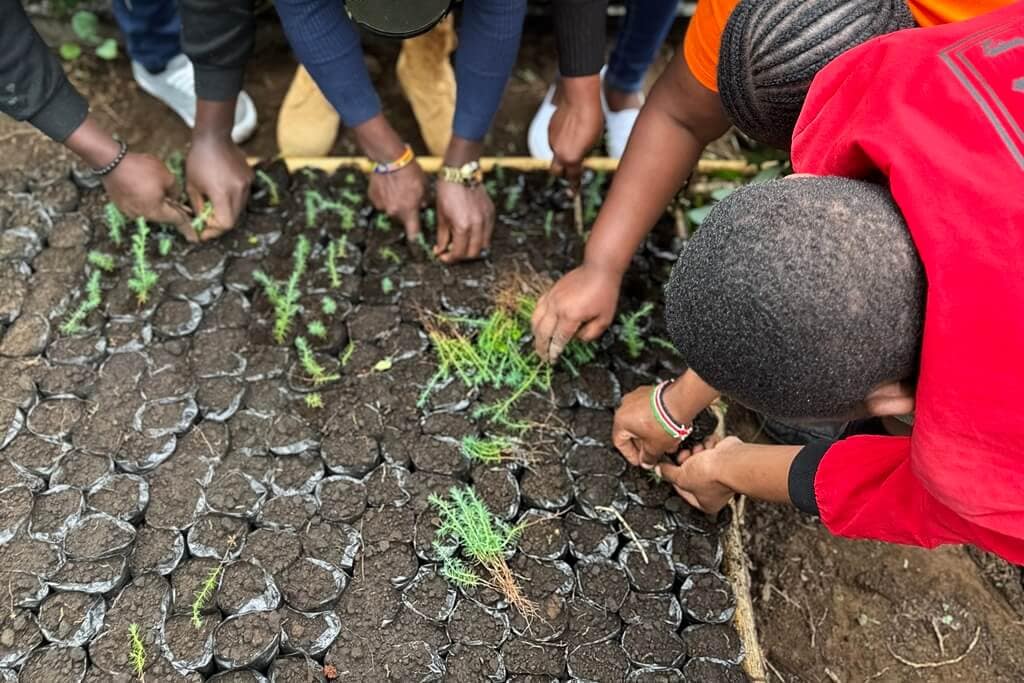
Rounding out the conference, I joined a smaller group of conference attendees for an all-day field trip to the Lari landscape to see and experience first-hand sustainable landscape management in action. Over the course of the day, we worked side-by-side with community members, prepping soil for planting, transplanting tree saplings, dancing, and hearing how agribusiness is being supported on the local level in the landscape. Rolling up my sleeves and getting dirty as part of this community was a powerful reminder that behind every data point are real people, communities, and stories, coming together to create a more sustainable future.
Reflections: Three Key Takeaways
- Respectful Data Empowers Human Accessibility: Making data available and actionable means empowering communities. From soil management to climate resilience, accessible data must be paired with a respect for privacy, ownership, and the community it represents.
- Face-to-Face Matters: Meeting in person fosters trust, strengthens partnerships, and honors the people behind the data. Our conversations at KenLAP underscored how much it means to rural communities when someone visits, listens, and shares their commitment.
- Data is About People, Not Just Numbers: Our work isn’t just about capturing data but about using that data to tell stories and understand lives. By prioritizing the human aspect of data, we can build tools and solutions that truly meet the needs of the people we serve.
Through these partnerships, we’re reminded of the profound impact we can have by making data meaningful, accessible, and human-centered. Here’s to more conversations, deeper connections, and a shared commitment to transforming landscapes and lives. We are indebted to KenLAP, Nelson Muiru at KENVO, and our funders, including the Foundation for Food and Agriculture Research, for enabling this work.