
Editor’s note: Welcome to the first episode of Season 3! As always, it’s a huge honor for us to speak with some of the most humble, thoughtful, and impactful social change leaders that, perhaps, you haven’t heard of. These are people who dedicate their waking moments to making the world better because they know that, had they chosen a different path, they would’ve felt something was fundamentally missing from their lives. For many, entering the social sector is not even a choice but a conviction from the start. For many others, it’s a difficult decision, to be fair: Do I seek financial gain and (try to) stabilize my life that way, or do I seek out a different kind of meaning? The founders of Fast Forward, today’s interviewees, shared with us some of the ways in which that decision gets made, starting with their own stories. At this point, they’ve worked for decades to help others do the same – a great place to start for anyone who’s listening and wants to enter the field.
So sit back and enjoy episode one of this new season.




Transcript
Jim Fruchterman
Welcome to Tech Matters, a biweekly podcast about digital technology and social entrepreneurship. I’m your host, Jim Fruchterman. Over the course of this series, I’ll be talking to some amazing social change leaders about how they’re using tech to help tackle the wicked problems of the world. We’ll also learn from them about what it means to be a tech social entrepreneur, how to build a great tech team, exit strategies, the ethical use of data, finding money, of course, and finally, making sure that when you’re designing software, you’re putting people first.
When you’re trying to build a tech nonprofit, it can feel like you’re out there on your own. Some of you will remember this from past episodes of our podcast. Funding is tough. Hiring your first team member is tougher. And sometimes even explaining what you do feels like you’re speaking a different language. But in 2014, two people in San Francisco decided to change all that. They believed that tech could and should help solve the world’s biggest challenges. And as they looked around, they realized that something was missing. There was no place for startup social innovators to go when they wanted to launch a tech for good nonprofit, a place where they could learn, grow, and find community. So they built one.
Fast Forward became the first accelerator dedicated entirely to tech nonprofits, organizations using code, data, and AI to serve people, not profit. Today, the Fast Forward portfolio includes over 100 teams reaching more than 260 million lives around the world, from education to climate to health. This episode, we sit down with Shannon Farley and Kevin Barenblatt, the two co-founders of Fast Forward. We’ll talk about how this movement began, what makes a tech nonprofit different, and how empathy, not algorithms, drives lasting innovation.
I’m Jim Fruchterman, and this is Tech Matters, stories of the people using technology that puts people first. Welcome, Shannon and Kevin.
Kevin Barenblat [2:16]
We’re excited to be here.
Shannon Farley
Thank you, Jim. It’s so special to be here with you.
Jim
Well I’m really excited to be talking to you guys because of course you run the premier accelerator for nonprofit tech for good organizations and that’s what the Tech Matters podcast is all about. So let’s start, what are nice people like you doing a technology for good social enterprise?
Kevin [2:37]
I think I grew up thinking that tech was for good without giving it a name. I loved my physics teacher in high school and that brought me out to California to study engineering. And back then, science and technology to me seemed like they were for good. It wasn’t always that technology was just for capturing people’s attention. Technology was to invent things and to make the world better.
When I graduated from college, I mostly worked at startups. I had my own startup and the company that I founded became a social marketing software company. And when I left that organization, I wasn’t sure what I wanted to do, but I knew I didn’t want to do social marketing. And that’s when I really was able to re-center myself around the tech for good space. And Sal Khan, who was in my business school class, was very early in his journey at Khan Academy. And in chatting with him, I was really surprised by how hard it was for him to get started. Here’s a brilliant guy who is recording videos in the closet of his house, who’s getting all kinds of traction, but who also isn’t getting any money. If he’d been a for-profit, he’d have raised millions of dollars. At the same time, I’m going to demo days. And you have to remember, in the early days of Y Combinator, there were thousands of tech accelerators at this time, all over the Bay Area and all over the world, supporting all kinds of organizations, except for ones that are using tech inside a nonprofits. And so even Sal, who was Bill Gates’ favorite teacher, wasn’t raising any money and was about to have to go get a job when he got his first check. And it just seemed outrageous that here’s someone who’s so smart, who’s going to dedicate his time to helping educate students all over the world, but you can’t have the resources to run and sustain the organization. And all of the challenges he was facing in his early days were very similar to those of a for-profit startup. And he also faced a lot of challenges of a nonprofit startup. So it seemed like the kinds of programs that existed for for-profits in terms of getting an organization off the ground should exist, but it needed to specifically also address the challenges that nonprofits faced.
Shannon [5:05]
Kevin was a VC-backed entrepreneur, but with the soul of a social entrepreneur. When he was in second grade, his dream was to be a crossing guard, and I feel like that best encapsulates this wonderful human who thought helping people was the best way to cross the street.
Jim [5:24]
…and Sal Khan as the gateway drug to nonprofit tech social enterprise. I love it. So Shannon, what was your story?
Shannon [5:34]
Yeah, I’ve been in social entrepreneurship my whole career. Fast Forward is actually my third nonprofit startup. The first is called the Burns Institute. It’s still in operation. It does amazing work reducing the rate of children of color who are locked up in public systems. And then I helped start an organization called Spark, which became the largest network of millennial philanthropists. But to get there, it was basically a bad tech nonprofit. We had an email list and a PayPal account and a wiki, and that’s how we did our work. And it was hard, and it was lonely, and I was so desperate for resources that I saw in the for-profit sector that my peers in for-profits had. And so when Kevin approached me with this idea, I was like, that is such a good idea. There should be an accelerator for tech nonprofits, and you should go start it. And then, thankfully, he convinced me to do it with him.
And it’s just been the most amazing journey to sit with now we have over 100 organizations who’ve gone through our accelerator program and to sit with founders in these really tough but interesting moments when they’re deciding who they’re going to be at scale when it’s mostly duct tape and hope. It’s just a profound gift to be with them on their journey.
Jim [7:01]
So you come together, sort of a nonprofit social entrepreneur, a disillusioned tech person, but seeing Sal Khan doing something kind of cool. And Kevin, you mentioned Y Combinator, and we’ve talked about accelerators. Let’s talk about what Y Combinator is briefly, and then kind of how Fast Forward has sort of updated that model for social impact.
Kevin [7:29]
So Jim, when I met Shannon, I was an entrepreneur in residence at a VC firm. And I had this idea that these programs that provided training and mentoring and some capital to really stage organizations and founders as they get started, should exist in the nonprofit space. And everyone I knew at that time when I was entrepreneur in the residency, and I would tell about this amazing idea of what I wanted to go start, would ask me what else I was working on, which I think was the polite Silicon Valley way of saying that’s a terrible idea, please tell me you have another idea that you’re also thinking about. And Shannon was the first person to say that that’s a great idea.
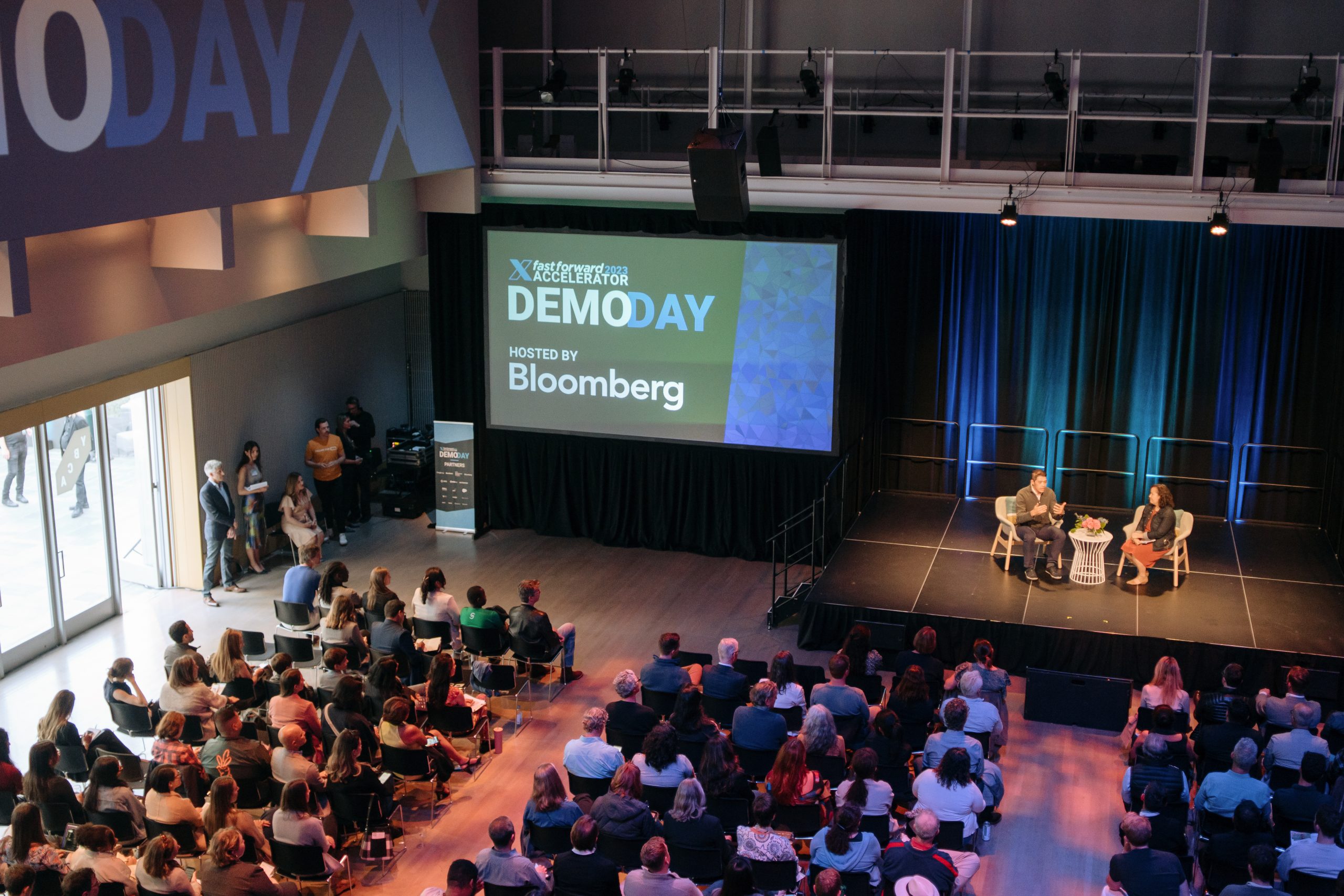
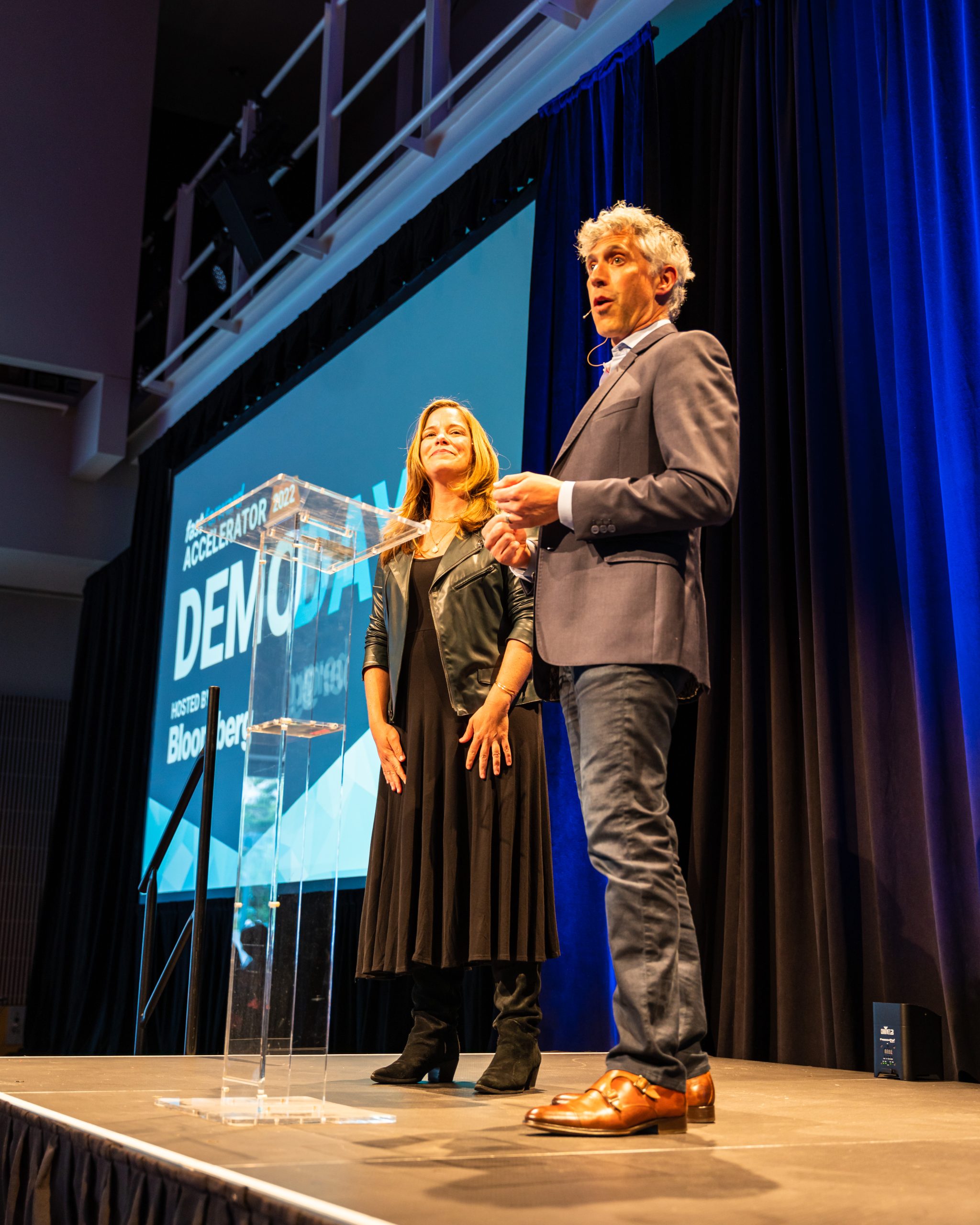
And like she said, she said, I should go work on it. The thing was, we joked for a while that, for profit, nonprofit coming together, it’s like chocolate and peanut butter, oil and water, people think these things don’t mix. So for Fast Forward, the model that we, we really took aspects of lots of different programs that’s for entrepreneurs in the creation of our program. So at that time, Y Combinator was an in-person program. That was a very important part of the program. And when we started Fast Forward, it was also important for everyone to come together in person. COVID changed that for Fast Forward, but that’s something we borrowed from Y Combinator as we also put a big emphasis on demo day, just like Y Combinator. So the program culminates in a really awesome celebratory event.
Jim [8:59]
So, you know, what is a typical Fast Forward participant? You know, who are they? Where are they from? What are they, what are they actually experienced while going through this program today… How many years on? 12 years on? 10 years on?
Shannon [9:14]
This will be our 12th accelerator, yeah.
Jim [9:16]
12 years on.
Shannon [9:17]
So, our first screen is proximity. We look for folks who have lived experience with the problem they set out to solve. So someone who was a teacher in a classroom that had no books, or someone who really wanted to go to college but didn’t see college as an opportunity for them, someone who was in the foster care system and wished there were better services, those are the kinds of founders we seek. In part because being a founder is hard.
We need folks to stick with it for the long run. People who have lived experience with the problem, who wake up every day thinking about how that problem can be solved, are more likely to stick with the problem in the long run. So we identify those founders. They come to us from different ways. They come to us from PhD programs. They come to us from other leadership groups. In 2025, we have a whole way of funneling early stage people with early stage ideas into our program so we can help guide them to become a tech nonprofit. Then when we find them, we give them some money. It takes time and effort to be in this program. We want to compensate people for what they’re going to do as being part of the Fast Forward Program. And then we have 13 weeks of curriculum, connections, and community that we’re investing in these organizations. We teach them everything from how to think about your impact model, how to set up your first financial model, to how to talk about who you are, what you’re building, and why it matters. We give them all of these tools so when we launch them into the world, they can attract talent, they can attract funding, and they can get visibility for the important work that they’re doing.
The basic ingredients actually haven’t changed that much over the years. What is fundamentally different is we now have a cadre of over 100 founders who have lived each stage of the tech nonprofit journey. And so we bring founders back every year to talk to the new cohort about what they did right, what delightful mistakes they made along the way, and what they would do today if they were building their organization all over again. The teams learn so much from each other, and it’s become this really beautiful synergistic community experience that I think we couldn’t have imagined how special it would have been in year one. And in year 12, it’s really what carries us to the next stage.
Jim [11:53]
So you’ve got a founder who cares about this problem deeply, has an idea for a tech nonprofit, and then for one quarter, your goal is to try to move them forward two or three years on their journey, or maybe places they wouldn’t have gotten to on the route.
Shannon [12:09]
Yeah, that’s exactly it.
Jim [12:11]
How much money do you give them?
Shannon [12:13]
$25,000.
Jim [12:14]
OK.
Shannon [12:16]
Not a lot, but we do teach them how to set up a sales engine to bring in more money. We help them think about their early revenue strategy from day one. We then broker philanthropic introductions, which is unique to Fast Forward. We have an entire team that introduces teams to foundations and individual donors and corporations to help fuel the next stage of their growth.
Jim [12:40]
Which is pretty handy given that it’s the number one thing that nonprofit CEOs worry about is raising the money for their teams. And then the demo day, I mean, you guys don’t do just one demo day, as I recall, right? So just tell us nowadays, where are your demo days? And is this more about exposure or are people actually raising a lot of money during demo days or a little bit of money? Because this is your celebration, right? Hey, you made it.
Shannon [13:09]
It’s all of that. The intention is to launch these teams onto a global stage. So everything is recorded because we’re in a post COVID world.
So we have a demo day in San Francisco and then we have a virtual demo day. And that pinch and mini documentary we create for them follows them for a long time. We use it as a first entry point to connect them to funders they simply would not have access to in the earliest stages. It becomes a way to get in the door. There are also individual donors in the room who give what they can to support these teams and press. Because visibility is a really important part of being a social entrepreneur. People have to know about your work.
It’s not enough to have a great idea and build a cool product. People have to use it. So we use this as a way to get storytellers in the room to share what these incredible people are building in their communities.
Jim [14:06]
So we’re going to come back and talk a lot about sort of your alums and what you’ve learned. But just for a moment, it’s important to point out that you guys are a social enterprise yourselves.
And so how big is the team? What do you do the other nine months a year when you’re not running this intense cohort? What does the social enterprise look like so that people get an idea for Fast Forward the enterprise as opposed to fast forward the sum of all your alums?
Shannon [14:38]
It’s different today than it was. Today, Fast Forward operates much more like a venture philanthropist.
The accelerator is one part of our program. We also run what we call a growth platform, which is where we take teams that have graduated from the accelerator program and help them navigate the messy middle. We help them raise bigger dollars, help them get bigger visibility opportunities, help them hire, help them think through their growth planning strategies. And we also have a body of work that’s around building the ecosystem. As I said, the top of the funnel, we serve all tech nonprofits in the world through various products and programs to help expose them to Fast Forward’s way of thinking and get them access to information in communities that would be hard to broker on their own. And the other biggest piece of work that we’ve been doing, which Kevin has been leading, is our AI for Humanity work.
Jim [15:33]
Cool, so let’s do some numbers here, right? So, you know, you’ve run a certain number of nonprofits through your funnel, you know, all the way down through graduating. You know, what percentage of them are still around?
Which one of them are sort of like, I guess, you know, venture capital, the math is, you know, one in 10 makes it, right? And that, and then you make so much money off of that one that it offsets the losses on the other nine.
Shannon [16:03]
You have over a hundred organizations in our portfolio and we define breakout stardom as an organization hits over $10 million in annual revenue because that is about 1% of nonprofits globally hit that stage. Revenue is not a perfect metric, I want to say that, but is the only apples to apples comparison across the sectors we work in.
We’ve had 12 organizations go through, surpass the $10 million threshold and we have a number more that are on the cusp of getting there soon.
Jim [16:39]
So, so really is 10%. It’s exactly 10%. You know, but um.
Shannon [16:45]
So far, our hope is that it compounds, right? Like when you leverage Common Lit, which is a tech nonprofit we all love, when you leverage Common Lit to teach one child to read, that compounds within communities.
Jim [17:01]
Yeah, and of course I could imagine there are people who are sub ten million dollars a year who have changed their field and Touched the lives of hundreds of thousands of millions of people, too
Shannon [17:10]
Which is why revenue is not a perfect proxy, it’s just, it’s the only common proxy.
Kevin [17:16]
But I think for Fast Forward, one of the things we learned through our journey is that starting a nonprofit is not the last hurdle that you face as a social entrepreneur. And so over the years, Fast Forward has built up its programming that supports not just people through the accelerator, but really is a support network for the organizations as they grow.
Because as you know, there are endless hurdles that organizations face as they grow. And the more successful they are, those challenges change. And so one of the things that we’ve realized as an organization is that in order to help our nonprofits be successful, there are different interventions that we can do at different stages to help them grow and be successful. And so like when Shannon refers to the dozen organizations that have already reached revenue thresholds, those organizations have done what we think is like almost, it would just, what makes the nonprofit space so hard is you have to find product market fit with your beneficiary, but also product market fit with someone who will support your work.
Jim [18:32]
Yeah, the whole third party payer issue of the social sector is the people who benefit from your product aren’t the people generally paying for it, especially if they’re the poorest of the four.
Shannon [18:43]
Yeah, I think the for-profit analogy is like a media company. The people using your good thing are probably not the people buying your good thing.
And so you have to figure out both and that’s just a profound challenge and it’s recently gotten much harder.
Jim [19:00]
I can’t imagine why. Let’s zero in on sort of this issue of more than money because, and I’m gonna say something a little bit inappropriate, but a whole bunch of donors say they’re bringing you more than money. And most of them don’t.
And that, you know, whatever else they wanna do is like a cost of getting the money, right? Cost of capital. But there are a handful of donors that when they say they bring more than money, they actually do. And I’m gonna pick the Skoll Foundation as an example of that, you know, where they’re trying to build a long time community. It seems like you guys are, you know, you’re obviously not the Skoll Foundation because you don’t have a billionaire backing you, but I think this idea of, you know, helping people with media and helping them with business models and helping develop the field and helping, you know, convince donors that this is the kind of donation they wanna make when, probably when you started, most donors never thought that tech for good was something they’d be backing, right? So tell us about sort of the change in the environment that you think you’ve helped engineer for the benefit of your hundred alums, but also, you know, the larger field.
Shannon [20:15]
Yeah, we spend a lot of time these days demystifying technology and AI for philanthropists. We know meaningful investment in technology is game-changing, not just for tech nonprofits, but the entire social sector.
But philanthropists are ill-equipped to evaluate tech proposals from nonprofits to help them think about different impact models that can come from tech nonprofits, different financial models that can come from tech nonprofits. And so we work really closely with philanthropists to give them exposure to technologies, especially AI. There’s deep, deep fear around AI. Much of that is justified. And if philanthropists are going to help organizations navigate what is coming, profound social change resulting from AI, they also have to understand and play with the technologies. So, so far, Fast Forward has worked with hundreds of philanthropists, foundations, individual philanthropists, and corporate philanthropists to help them think through what this is going to mean for their portfolio of organizations and how it’s going to change society as we know it.
Kevin [21:29]
Also, I’ll just add, to me what’s super interesting about Fast Forward is the kinds of entrepreneurs that we support, and they almost all have a personal experience to solve, and many of them are experts in that field, whether that means they’re approximate, or that they’re PhDs. For many of them, this is what they really care about. This is their life’s work in this world.
And unlike what I saw in the for-profit sector, which is more commonly committed to a solution than different to what problem it solved, it’s like, I want to take this cool thing I built and figure out what problem it solves. Let’s go find a market for it. In the nonprofit space, the entrepreneurs we support really care about the problem, and I’d go up into all kinds of solutions. At the same time, for many of them, it’s not just their first startup. For quite a number of them, it’s their first job. So not only have they never hired anyone before, they’ve never been hired. Maybe they’ve never gone through an interview. They’ve never been part of an organization, much less run one on their own. And so a lot of the value from Fast Forward comes with connecting them with peers and the network to really help them round out their skill set.
They might be experts in mosquitoes or programs or educating kids on how to read, but they might know a lot less about nonprofit accounting and filing taxes and interview questions. So connecting them with the confidence and peers and community and experts to help them grow as leaders as they grow their organizations is incredibly valuable for them as founders and leaders and organizations.
Jim [23:20]
Well, and, you know, obviously the point of my podcast is to share the stories of peers about starting this. So of course we’re talking about peers who have generally, you know, selection bias have been successful in starting this and we don’t spend as much time on those basic mechanics that are necessary to get to that point.
So it sounds like you guys in some ways provide, you know, the, the background that, you know, you, you can’t go off and take a class in this today. Yeah, you guys are, you know, probably the best path to get yourself from zero to 60 as a tech for a good startup.
Shannon [23:53]
We do have a book on it. We have a playbook on how to do all these things.
One of the things Fast Forward does is we open source all of our curricula because we shouldn’t have to get into our accelerator program to benefit from the knowledge of the program. And so it’s all free and open, available on our website.
Jim [24:09]
So you go to have a RAGs AI solution that is like Fast Forward in a box. I mean, is that coming?
Shannon [24:19]
We try and we did a GPT on like founder advice to see if it was like a way we could scale office hours. Sometimes the questions we get are like, should I have my mom on my board? And the answer is you can, but probably it’s a bad idea.
You know, I think it’s, if we can scale Kevin and I out of some office hours, that could be a good thing, but no, for right now.
Jim [24:42]
I mean, a pretty cool product that I’ve been playing with is Glider, which is the lean startup AI just trained on all the lean startup stuff from the last 15 years. It’s out of UC Berkeley’s Haas School of Business. So very, very cool.
But this is kind of one of the things that AI can do. So let’s talk more about AI. Because obviously you put a big priority on it. It’s what you’re doing. You’re training philanthropists on it.
Kevin [25:10]
In our work, looking at AI and nonprofits, many nonprofits, if not most nonprofits or nonprofits, should be thinking about how to make their operations more efficient.
AI is an amazing tool for helping helpers, and we see that with AI helping farmers by sort of AIifying the extension agents, helping teachers become better teachers, helping social workers be better social workers, helping judges in courtrooms, and helping caseworkers do their work more efficiently.
Shannon [25:45]
The examples I love, the technology is not the most whiz-bang technology, like it’s been around for a long time, and it is AI though, like voice to text translation software. And the reason I love it is because these are problems that human, they’re just not enough humans to solve.
Like when you think about an Indian courtroom, in India, the time from hearing a case to a case being resolved, the time lag is about 30 years. So, Adalat, an AI platform based in India, is using voice to text translation software to transcribe what’s happening in an Indian courtroom. India doesn’t have enough trained stenographers to properly transcribe what’s happening, witness statements, judgments. And so, Adalat has built this service. It’s already in 20% of Indian courtrooms, and it is speeding up access to justice. Now, what’s really important is that there are humans in the loop. There are humans reviewing all the transcripts. It’s just speeding it up. And this technology has been around for a decade. It’s not like wildly novel, but it’s applied in a non-market use case. It’s applied to an area that wouldn’t otherwise trust technology, and it’s unlocking a basic human right. And for me, who spent my career in social justice, I am deeply impatient to solve some of these problems, and the AI gets us there faster.
Jim [27:20]
Well, as you can imagine, Adalat is on my list of people I want to interview for my podcast. I think they’re amazing, right?
But I think that’s a great example or Heejay Lim of Talking Points, also based on similar technology and getting immigrant parents to be able to communicate with teachers. Another great example. But I think, I just wrote a piece called Glorious Rags about retrieval augmented generation, which is where you feed into the AI kind of your best models. And of course, Digital Green, which I think is one of your alums, right? Is like, they’re the people who kind of pioneered in that area of giving farmers advice, but they spent a lot of time and effort to do that, but they now have a workable product. So let’s talk a little bit about product versus project. I mean, I think you guys exist to get enterprises going, they’re gonna be around for the long term. And a lot of tech for good is project oriented. Let’s do something for a year or two. So can you talk about why that sort of lasting impact thing is so important to your value proposition?
Shannon [28:26]
The tech changes, but the problems don’t get resolved. So we are interested in investing in founders who are going to institution build and not be as precious about the particular tech product in the moment, but how you solve the problem.
And it’s one of the reasons like contests don’t always work. Uh, like if you just give some money and some pro bono engineering talent, that’s not going to live and breathe within the organization to create something wholly new. You need to have tech strategy in the C suite. You need to have a financial model that reflects a deep investment in tech that is invested in at the same level or more than program. You need, it’s just a totally different way of operating and we’re here to level up organizations that are doing that and show them as models to the field.
Jim [29:23]
Yeah.
Kevin [29:26]
The problems these entrepreneurs are trying to solve are hard. They take time. They’re not projects. I think it’s, you know, for them it’s their life’s work.
So if you look at like a Jared from career village, who, uh, feels like his life was changed by a mentor and solid career advice, and then he looks at his peers and he looks at the world and most kids get a few minutes with a guidance counselor, there’s like one guidance counselor for like every 500 students in America, then the idea of a tech solution, uh, makes sense. And like Shannon mentioned, the tech might change over time. So what started a dozen years ago as a Q and a website, almost like a Cora or a stack overflow, as the amount of information on the site grows and the technology changes, career village can now launch coach, which is like a rag powered, you know, if you have millions and millions of answers by professionals to the questions that kids have on their minds about what they should do with their wife in terms of their, um, professions, he can provide really solid advice. Career village can provide really solid advice to young people. And while in the beginning, career village was able to do that by, I’ll ask a question and a day or two later, a professional will provide answers to my questions. Now, uh, I can get those answers in real time, still based on the answers from, from professionals, but collectively and customized for specifically to my, to my question.
Jim [31:12]
So I think you’re kind of dancing around the AI danger issue and which is, and we had the famous example of Tessa, the weight disorder chatbot that told people to do the opposite of what it should do, because it was probably giving the average of advice from the internet, which is not that great on weight disorders. I think the whole point of this technology we’re talking about, which is RAG, Retrieval Augmented Generation, is that you try to take the LLM, the large language model, and say, I want your answers to look like the answers from all these expert humans, or I want your answers to look like all of the great curricula that we’ve ever developed or whatever it might be.
And that creates the beginning of Digital Green. I want you to give the ag advice, and I want to show you a video of someone in speaking your language, giving that ag advice. So I think it’s, I mean, can you talk a little, so one of the reasons I think we’re gravitating towards this is it solves a real problem. It scales up a whole bunch of humans we’re never gonna have to actually help people who are never gonna get helped or never get helped in a reasonable period of time. And you’re less likely to make up something that’s terrible for them. So can you talk more about guardrails and AI safety as you guys are developing curriculum about how to do AI in a way that is ethical and doesn’t hurt the people who are seeking help or trying to get the impact that you want?
Kevin [32:37]
Yeah, I mean, people often say that, like, the nonprofit sector eats last at the table of technology. Like, they’re the last to get the advantages.
But actually, I feel like this is the area where the social sector is leading the way. All the organizations you work with are super thoughtful as mission-driven organizations about the potential harms that the technology can solve. They’re not out to move just as quickly as possible. They’re out to make sure that the people who use their products are truly helped. And I think that leads to an approach that should probably be modeled by more of the nonprofit space that’s thoughtful about bias, that’s thoughtful about the responsible use of AI, that’s thoughtful about the kinds of responses. There have AI checking the responses and humans checking the response. There are so many guardrails and so much concern about something going wrong that it provides a model for other organizations who want to be thoughtful about the potential impacts of AI for their users.
Shannon [33:39]
Trust is one of the most important things these organizations have, and they’ll do anything to protect it. And so they really invest a ton of energy and time and money in ensuring that quality answers are surfaced.
And I think they are actually influencing even how the LLM companies, the platform companies that they work with, are thinking about trust and safety because of their use cases. They’re often in the early sandboxes of some of these organizations, and in doing so, they’re influencing what those builders are creating.
Jim [34:17]
… from your lips to their ears, but I’m not necessarily seeing that focus on safety in the major LLM companies, because they’re in this death cage match to win, right? And make all this money.
So that’s one of the reasons why I’m a lot more excited about responsible, trustworthy nonprofits, putting this technology to use for a lot of care. So, and I think that’s your community. So while I know it’s, we need to be kind of wrapping up this great interview. We’ve covered a lot of territory. I want to make sure to get sort of your final thoughts on, you know, as you’re trying to build the field, people are listening to this podcast, eager for stories of technology doing social good. What advice do you give them if they want to use technology for social good? Maybe want to start a company that gets into Fast Forward.
Shannon [35:06]
Well, I’ll say one thing, which is that in our roadshow of teaching people how to use AI and how it can be a force for change, what has happened every single time we’ve done it is there’s always like a secret AI user within a team. We’ll be told by the organizers that nobody in our nonprofit organization, no one in our foundation uses AI at all. And then every time without fail, someone has like trained an AI on all of the grants database and other people on the staff didn’t know. So we feel strongly that one of the things you can do as a nonprofit organization or a philanthropist is to ensure just to know that your staff is using AI and to institute an AI policy.
So folks do it safely. They play in a sandbox of your creation. Fast forward has an AI policy that’s free and open available on our website where you can upload your organizational documents, your values, and through AI generate an AI policy that makes sense for your organization. You still need a human in the loop. You need a human to edit it, but it’s an important tool, an AI policy, to ensure that you’re using the best of the technology and protecting the security and privacy of your beneficiaries.
Jim [36:24]
A great resource, because everyone should have one these days. So they don’t do something bad and they do more good. All right, Kevin.
Kevin [36:34]
I want for us at Fast Forward, we know it’s an easy journey. The entrepreneurs we support face all the challenges of tech startups and all the challenges of nonprofits. But I think that there’s no better path.
We at Fast Forward, I mean, I really feel like I have the best job in the world supporting the entrepreneurs, many of whom you’ve had on your podcast who are making the world a better place. And I hope all the listeners will be inspired to follow some of our path.
Jim [36:59]
That’s right, because we need thousands of people to go off and start tech social enterprises that are focused first on human impact and using technology as a tool. Well, thank you both for doing so much to make that journey easier and spreading that knowledge of how to do it well, far and wide.
So thanks again for starting Fast Forward and for all the things that you guys do on behalf of the Tech for Good field.
Shannon [37:23]
Thank you Jim, we’re grateful for you.
Jim [37:29]
A big thank you to Shannon and Kevin for reminding us that technology isn’t the solution. People are.
If you enjoyed this conversation, be sure to follow or subscribe to Tech Matters on Apple Podcasts, Spotify, Castbox, or whatever platform you’re listening from. Please stay tuned for the next episode where I have the pleasure of talking to Tracy De Tomasi, the CEO of Callisto. We’ll be addressing a highly sensitive topic.
Callisto is a software platform that enables survivors of campus sexual assault to confidentially name their assailant and discover if they’ve harmed others. This project is particularly close to my heart and I look forward to sharing the Callisto story with you.
And we’d love to hear from you as well. Give us your thoughts, questions, or guest ideas by writing to podcast at techmatters.org. Techmatters.org. I want to particularly acknowledge the support of the generous donors who both support Tech Matters the organization and Tech Matters the podcast, especially Okta for Good. I’m your host, Jim Fruchterman. Thanks for listening.