
CONTENT WARNING: This articles contains references to sexual assault.
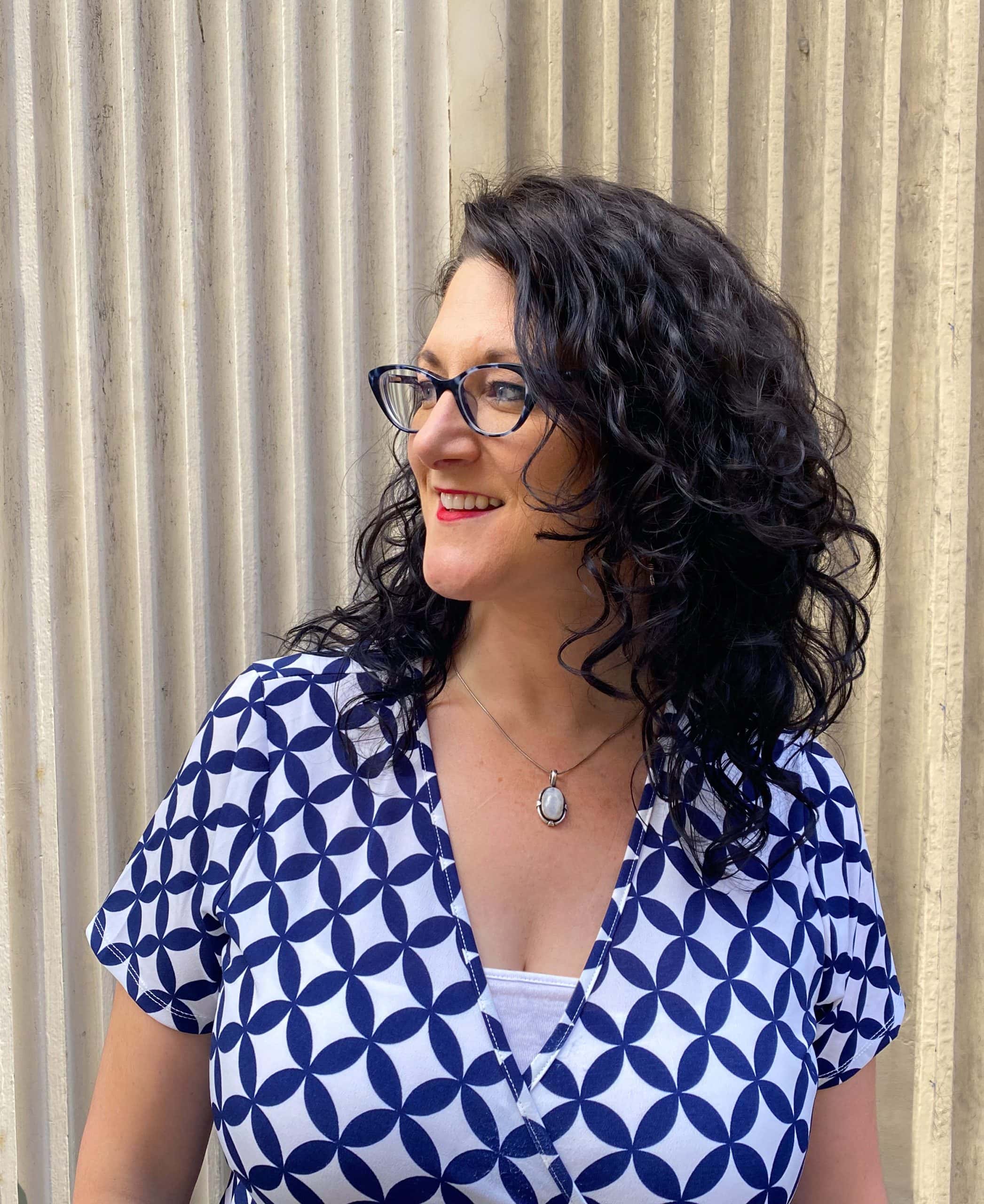
Editor’s note: The focus of this episode is not technology. It’s how a project that was started in 2015 by Jess Ladd, and is now run by Tracy DeTomasi (see right photo), became an effective way of helping assault survivors, providing them with genuine support, as well as actively preventing new cases of assault.
This strength in numbers is key in developing the courage to speak out. And it should be clear how vital this is: Every day, the world is finding out more about Epstein and those close to him, largely thanks to the courage of the many survivors who have been speaking out publicly, demanding justice.




Transcript
Jim Fruchterman
Welcome to Tech Matters, a biweekly podcast about digital technology and social entrepreneurship. I’m your host, Jim Fruchterman. Over the course of this series, I’ll be talking to some amazing social change leaders about how they’re using tech to help tackle the wicked problems of the world. We’ll also learn from them about what it means to be a tech social entrepreneur, how to build a great tech team, exit strategies, the ethical use of data, finding money, of course, and finally, making sure that when you’re designing software, you’re putting people first.
Technology can amplify harm or it can enable healing. Today on Tech Matters, we’re exploring a software platform that uses encryption, not for privacy’s sake alone, but to protect some of the world’s most sensitive information, the information about cases of sexual assault. And this software provides agency and control for those survivors when society generally fails them.
My guest today is Tracy DeTomasi, the CEO of Callisto, a nonprofit that helps survivors safely identify serial perpetrators and find strength in numbers. Welcome, Tracy.
Tracy DeTomasi [1:20]
Thank you so much for having me, Jim.
Jim [1:22]
Now, full disclosure, I was on the Callisto board for six years, including a stint as board chair. And so I’m a big fan of Callisto, but I think our listeners want to find out why I’m so enthusiastic about Callisto.
But in our normal approach, we’re going to find out, hey, Tracy, how come you’re running a tech for good nonprofit? So I’d like to understand a little bit more about the journey that brought you into this role, because usually, whoever ends up running a tech for good nonprofit, it’s not exactly a straight line to get there.
Tracy [01:58]
Absolutely not a straight line. As I tell people, I’m actually a licensed clinical social worker by training, which doesn’t really seem to fit a tech for good nonprofit role, but here we are.
I have been working in gender-based violence for 25 years. I started as a therapist for adolescent sex offenders, and really started to understand the dynamics of gender-based violence through an offender’s lens. I worked in group homes for a long time. I ran a domestic violence shelter, and I started to realize that we needed to do more to help survivors because what we were doing now was helping survivors heal, but it wasn’t helping solve the issue. It wasn’t stopping domestic violence. It wasn’t stopping sexual assault. And so I got into more work around culture, and I also dabbled in the tech world a little bit and started to try to develop virtual reality trainings to assist with anti-sexual harassment work. And unfortunately, COVID and the pandemic kind of killed that project. But I know that technology is really important, and abusers could also use it in really, really harmful ways. And so when I found out about Callisto, I was really, really interested because I think our technology is key to really helping survivors in such a different way and holding serial perpetrators accountable so we can actually change the numbers of prevalence of sexual violence. And having done this work for 25 years, I think that this technology is so innovative to actually make a difference where we’re not just helping survivors, which we are doing, but we’re not just holding perpetrators accountable, which we are doing, but we’re doing both at the same time through the use of technology.
Jim [3:57]
So Tracy, that makes a lot of sense. So many social entrepreneurial leaders are moved to do something new because they are frustrated with the limitations of the system as it exists. Even though if it’s doing good, there’s so much more that needs to be done.
And so, you know, tell us a little bit more about how does Callisto do this, you know, work on helping survivors and work on, let’s say some of the root cause issues to reduce overall prevalence of sexual violence. So how do you get that one, two going?
Tracy [4:31]
Yeah. So what our technology does, and first of all, it’s end-to-end encrypted. So that means that everything is encrypted before it hits our servers, which is really important because this information is really sensitive and people don’t want survivors to report. So we need to make sure that this information is really confidential and very protected.
But what a survivor does is if they want to find out if their perpetrator harms somebody else, they can enter into matching. And it’s fairly simple. They put in the state where the assault occurred, and that is because sexual assault laws vary by state, and we want to make sure to be able to give them the most accurate information. And then they put in a unique identifier of their perpetrator. So their perpetrator’s social media accounts, email address, phone number, there’s about 12 different things that they can put in, and they put in as many as they know, and that’s what we use to match on. So everything stays in the encrypted state until there’s a match. And so if two people put in the same Instagram handle, let’s say, we get notified that there’s a match. The survivor does not immediately. It’s not like a dating app. And the survivor information and the perpetrator information are still encrypted to us. We get to see the state and the school and any kind of accessibility needs for the survivor. We then assign that case to a confidential advocate who is trauma-informed, trained in working with survivors, and protected legally under confidentiality. And they meet with the survivors. They reach out to the survivors separately and say that there’s been a match. The survivors then have the choice of whether or not to meet with that advocate. And if they choose to meet with that advocate, they talk about what’s a criminal justice option, what’s a civil justice option, what’s a Title IX option. And those can be really confusing to survivors if they even have a case. And then if it’s safe to do so, and the survivors consent, because we put survivors in the driver’s seat all along the way, the advocate will work to connect those survivors for them to pursue healing and justice, whatever that means for them.
So we are not reporting to police, Title IX or HR. We are not investigating what happened. We are really connecting those survivors to know that they’re not the only ones and that they have a potentially, you know, their strength in numbers. And so they potentially have more of a case if they come forward together, which we’ve seen in the Me Too movement and giving them the understanding of what options they have before they have to choose them. Because I think what people forget is that the systems that are out there right now don’t work. They’re very problematic and often more traumatizing for survivors, which is why we need technology like this to get around those systems to help empower people to use those systems in a different way.
Jim [7:30]
So not everyone knows what Title IX is. So, I mean, criminal is you go to the police, civil is you sue them in court for damages, and Title IX is…
Tracy [7:43]
Title IX is legislation that all K through college schools that receive national funding have to follow. And it’s a statute that talks about gender equity in schools.
And so there’s a lot of different things that Title IX covers, but one of the things it covers is sexual assault on college campuses. And so if you’re trying to get your needs met through the college or through the university, you will report to their Title IX office.
Jim [8:12]
OK. So and again, this is a U.S. law target at U.S. education.
But I would just underscore I have a family member who was sexually assaulted at college campus and the Title IX office was not on her side. Just no. Yeah. Title IX is really.
Tracy [8:29]
to protect the institutions and tell them what they have to do. It’s not survivor centric at all, and it wasn’t designed to be. Okay.
Jim [8:37]]
So, so let’s dive into the I want I want to especially highlight sort of the serial perpetrator dynamic that I think motivates some survivors to act where maybe they wouldn’t act just on their own.
Tracy [8:51]
Yeah. 90% of sexual assaults on college campuses in the U.S. are committed by serial perpetrators who, on average, offend six times while in college.
And so our theory is that if we can connect two survivors and they can collectively go forward and have accountability before that perpetrator gets to six, we can reduce college sexual assault by 59%. And I think that that’s really powerful because about two and a half million students are sexually assaulted on college campuses each year.
Jim [9:24]
Wow. So, so basically survivors don’t generally report because if they’ve talked to anyone who’s been a survivor, they’re told the system is stacked against you. And so I don’t know, there’s a large percentage that don’t go reported. It’s like 90%, right?
Just don’t do anything. And so, but, but in this match dynamic, people who might not have stepped forward on their own are going to step forward one because they’re stronger because they’re together with another survivor, but two, to protect the potential future victims in solidarity. So it’s very interesting that you’re using technology to create this power for survivors to do something about the perpetrator.
Tracy [10:09]
Well, I think that if you look back into the Me Too movement and you think about Harvey Weinstein, he had been reported numerous times. And there were so many of his survivors that also did not report, but they didn’t know that some had, they thought they were their own. And one of the key pieces of journalism that happened during that time, a book and a movie called She Said was written about it. And one of the key lines in there is, these survivors are not gonna jump unless they jump together, right?
And so, but the only reason those journalists were able to connect with all these survivors and convince them to tell their story publicly was because of the time, you know? And it was, people had known that Harvey Weinstein was an open secret, but the only reason that the reporters ever even cared about it was because it was Harvey Weinstein and he was worth reporting on. And so we are using technology where somebody doesn’t have to go to the newspapers. They don’t have to go to the media. They don’t have to go to journalists to connect the story to make people care about it. They can have their identities hidden and they can find each other without having to publicly disclose and use of technology to do that and then make a decision whether or not they wanna come forward.
And so sometimes people have not reported. Sometimes people have reported and didn’t get any results. And so we are helping both cases because out of all the years I’ve done this work, there are many survivors, not all, but many and probably most survivors say, I didn’t report, but I always wondered if he did it to somebody else. I reported because I wondered if, I didn’t want him to do this to anybody else. And that shouldn’t be the case. One assault should be enough for accountability and yet that is very rarely the case. 99% of perpetrators walk free.
Jim [12:04]
Yeah, and this dynamic, and just to be clear, even if you make a match, the survivor can still say, I still don’t want to come forward, I still don’t want to do anything, but the fact that they are not alone has value to them.
Tracy [12:22]
Absolutely. A friend of mine, Jess Michaels, was assaulted by Jeffrey Epstein in 1991, and I have permission to share this story.
She lived for almost 30 years with thinking that she was the only one and that it was her fault. And how she found healing was that she saw his picture in the paper in 2018 about how many people, how many women, and how many girls he had done this to. And she says that was the day that her healing began because she realized that all the ways she thought she was stupid and all the ways she thought that it was her fault and she put herself in that situation were gone because she realized that he targeted her, he groomed her, and he was very manipulative about that. And so even knowing that there’s a match, regardless of if you do anything with it, that can be extremely healing for survivors to know that they’re not the only one.
Jim [13:22]
Well, and I know that recently you went to Washington, D.C. to join Epstein’s survivors. Do you want to share anything about that experience and what it meant to you and Callisto?
Tracy [13:32]
Yeah. You know, Jess asked me to go in order to support her and to support the other survivors. And it was incredibly powerful just to listen to all of their stories. And some had spoke for the first time on that stage, and it was incredibly powerful.
And it also just showed the necessity for something like Callisto. Because if all of these women were able to come together 30 years ago, how many of them wouldn’t have even been on that stage? If people believed them, you know, this is somebody that we can all now agree that he did egregious things. And if you read some of the articles through the New York Times and other sources about the money and how many people knew of what was going on and covered it up, entities like Chase Bank have been sued. And the survivors won cases about following the money and seeing how many people were involved in this. And you see this big web. And until now, there’s been no way for those survivors to connect. And that experience was extremely powerful. And it really just motivated me to keep going because spreading the word about technology that relates to sexual assault is not easy, especially when people don’t even realize often why we need to exist and why this technology is helpful.
Jim [15:00]
I just love the idea of technology rejiggering the power equation so that rich and powerful people don’t have immunity or impunity for the criminal acts that they commit. So this kind of, this is amazing.
Is it easy to fund this?
Tracy [15:24]
No [laugh] It is not easy to fund this for several reasons. First of all, gender-based violence is difficult to fund. In philanthropy in the US, less than 2% of all philanthropic funding goes to women and girls issues. So that includes gender-based violence, but it also includes reproductive rights and girl empowerment. So you think about, you know, girls who code, everything like that. It also, Susan G. Komen, so you think about anything with a pink breast cancer ribbon. All of that is within that 2%. And then sexual assault is just a small sliver of that 2%. So sexual assault in general is underfunded, and it’s getting cut worse right now in 2025. You know, I just read today that the only rape crisis center in Philadelphia is at risk of closing because of funding. And so that’s really problematic.
And then when you have technology that nobody has used before, so people don’t know where to put it in their brain. They don’t understand how bad the systems are. So many people think that our criminal justice system is like a episode of Law & Order SVU, which couldn’t be further from the truth. And so they don’t know why our technology has to exist. And because it doesn’t exist anywhere else, it’s hard to explain it in a very short sound bite. And there’s so many questions about security and understanding of how the matches are and about false accusations and false reporting that it’s hard to do, not to mention getting to awareness of it when people don’t wanna follow sexual assault on Instagram. It’s not a feel-good topic. It’s triggering. People don’t wanna come forward as victims often, because if you look at the comments section, people treat victims very, very terribly, and it’s awful. So there’s so many challenges of funding in this space.
Jim [17:24]
Now, one of the things about technology for good is sometimes you have a revenue model and donors push tech for good organizations to find a revenue model. Callisto tried a revenue model and it didn’t work out so well.
Do you want to share a little bit about the experiment with Title IX offices?
Tracy [17:42]
Yes. So when we started, the idea was to sell this matching technology to Title IX offices, and there were a lot of problems with it. They didn’t have the budgets. They didn’t want to invest in new technology. But my own opinion is that they didn’t want to actually identify serial perpetrators because it costs them money. It makes their school look bad.
It makes enrollment different, not to mention it causes lawsuits. So you think about Larry Nassar, who was the USA Gymnastics doctor, who was reported to Michigan State University on numerous occasions, and they found him not guilty or just dropped the case. And so there was a lawsuit against Michigan State University that those survivors won. So it costs them a lot of money and they don’t want to deal with it. And then survivors also wanted more. They wanted to know before they reported to Title IX because that was still a barrier of going to Title IX. And so we couldn’t get it off the ground. We couldn’t get it funded in that way.
Tracy [18:48]
Yeah, and I remember there were some television offices that signed up and then didn’t promote the service at all for the reason that you kind of described, which is they didn’t really want it to succeed.
So what that means is Callisto is human rights and civil rights technology and there’s not a great revenue model for human rights programs in general and technology specific. Does Callisto lead with the technology or in your messaging to the survivor community, the people you’re surveying to donors?
Tracy [19:24]
We lead more with sexual assault and we lead more with messaging to survivors than we do with the technology. And part of that is my background of working in all of this. But part of it is that is our audience and that is who we’re supporting. And some of them care about the technology and some of them don’t. They just want a solution.
And they’re really not interested or care about the encryption or how amazing our cryptography board is or anything like that.
Jim [19:50]
I love that stuff! [laugh] But I don’t have money.
Tracy [20:00]
[laugh] You do. You do. And if you get too involved in the technology of it, survivors don’t realize it is for them. Because again, a lot of survivors don’t know that they’ve been assaulted. And so we have to get through that first and be a solution to get rape crisis centers to talk about us, to get other people doing the work that are working with survivors to talk about us.
So we definitely lead more with sexual assault and we know how well our technology does. But again, a lot of people don’t care about the security of our technology. But we care about it for them.
Jim [20:32]
Yeah, indeed. Well, and I think this is where, you know, Callisto’s issues are generalizable, right? It’s hard to fund human rights technology. And there are very few donors that like to fund technology for the sake of technology.
And it’s not clear that the technology sells with the people you’re serving either. So, you know, if a donor actually is interested in technology, sure, you’ll bring it up. But really, you’re going to talk about the social impact. And, frankly, I think when things work well, you know, 90% of the impact is about your program innovation, this idea of matching survivors and making them more powerful. The fact that technology, you know, made it happen, maybe that’s 10 or 20% of the puzzle.
Tracy [21:16]
Agreed, yeah. And I think that when we were building it, it was like creating a, creating the technology was really interested, people were really interested in funding that, like new ways to use technology and new social issues to address with technology.
But now that it’s running, people are more interested in the impact and the social impact than they are about the technology.
Jim [21:38]
Well, and also, you know, when people are interested in funding tech, they’re usually interested in funding the latest fad. And crypto, which is very exciting, is not the latest fad anymore.
And it’s not clear that AI is going to do very much for your survivors at the moment. So at least do you think so?
Tracy [21:58]
We have not dabbled in AI because we are doing what we’re doing. And like you said, we are the previous fad of technology. And AI is still a little bit, I’m hesitant from a trauma-informed perspective to figure out how to use AI. And we’re not going to use AI just to use AI because it is the fad.
And I think that there’s still a lot of questions out there about how AI impacts survivors from a trauma-informed standpoint. And we’re not willing to risk that for survivors right now.
Jim [22:28]
I mean, this is the thing is we’re not using a certain technology because it’s the cool thing to do. We’re using it because it’s fit for purpose.
And you’re one of the great applications of crypto technology. There weren’t as many of those as we thought five or seven years ago, but this is a terrific one. Well, so let’s continue on the funding challenge because funding technology in human rights and civil rights is tough, but it’s been especially tough lately. So do you want to share some of the experiences that you’ve had over the last year or so on the funding front that I think our listeners will be interested in hearing about?
Tracy [23:09]
Well, just over a year ago, we announced the closure of our organization because we ran out of funding. It takes a long time to get funding. We had this perfect storm of a founder leaving during a pandemic when students were on college campuses where we had changed the technology from that technology that I previously mentioned about selling it to to Title IX to what we do now, which is open to anybody with a .edu email address for free, which also changed our marketing from B2B marketing to try to get the universities to use it versus the survivors to use it, and it changed everything over the course of two years. And with the pandemic and with the decrease of funding and all of that, we kind of fell off a cliff and we announced that we were closing.
And we put out this heartbroken email and we said we need a miracle to raise a million dollars. So we had enough for one year of operating costs. And I honestly didn’t think that we were going to be able to do it. Yeah, it was this. My staff needed it to happen. And I said, yes, go ahead and do it. And we did it. We are still here a year later. Survivors said, absolutely not. Not on my watch. They started sharing their stories of there was one survivor who had matched who decided to share their story about how powerful that was. We had Arnold Ventures came forward and said we don’t want you to close and were able to give us some big funding for us to stay open.
And it was an amazing… it was a horrific experience as the CEO, but it was also really amazing because it showed how powerful the technology was. And, you know, with all of the funding cuts, the federal funding cuts, while we don’t get government funding, so many rain crisis centers and domestic violence shelters across the country do. And so they have been impacted. So the survivor resources have been impacted. And so they’re going after different funding that we typically go after. And again, there’s not a lot of funding out there for sexual assault and domestic violence. One of the other challenges is that we fall in the cracks of a lot of funding. So for nonprofits, it’s mental health. Well, a lot of mental health folks think about very specific cases and they don’t think about the ongoing mental health impacts of trauma. Unfortunately, they think about physical health and they don’t think about the ongoing physical health impacts of sexual violence, criminal justice, where we aren’t fully in the criminal justice system, but we are adjacent to that. And so we don’t always qualify for that kind of funding education funding. We don’t always qualify for because people don’t think about 34% of survivors dropping out of college and not finishing because they have been assaulted in college. And so we fall through a lot of the cracks on a lot of this funding and making a case for that is for all of those. While we could is really challenging because research around sexual violence is complex.
And right now with the executive order that was released in I think February of 2025, you can’t say women, you can’t say victim and you can’t say trauma in order to apply for a research grant. And so while we wouldn’t be applying for the research grant, this is going to be an ongoing snowball effect of what is to come in the next five years in this field as well.
Jim [26:44]
You know, it’s mind-blowing that it’s only a million dollars a year to keep Callisto going. I mean, the payoff to society for, you know, avoided sexual assaults and, you know, basically improved mental health of survivors has got to be way more than that.
But I think this is a challenge that a lot of people in the tech for good space fit into is that no donor says, I’m, or almost no donors, I’m going to go and fund, you know, tech for good, or I want to go fund the things that solve five problems rather than just one problem. And so, and I think the other thing is that, you know, you’ve talked about it being a challenge of, you know, the field is shrinking, the federal money, other money, but also that I think, I think philanthropy seems to be overall kind of backing away from a lot of innovative enterprises, you know, notwithstanding bright spots like Arnold, right? But is that your experience?
Tracy [27:51]
Yeah, absolutely. I think that there is this hesitancy of there’s so many issues happening right now of like, which one do we tackle? And how do we do that? And how do we give, how do we funnel money into one cause to make the biggest impact? And I think that showing our impact with the level of confidentiality and the encryption that we do is challenging with the data because our data is so sensitive. And so it’s like showing the impact and our impact is long term impact, right? It is not, these systems for accountability take years. And so a lot of times people also want you to solve something really quickly.
Like why in a year have you not done this? You know, where’s the data? Where’s this? Where’s that? And we can’t always get that and people, people’s attention spans, for lack of a better word, are often short and they want you to have a solution. And I, you know, I’ve talked to some friends who are in for-profit tech startups and how many millions of dollars they get and how so many investors just expect a lot of the startups to fail. You know, I would, I would assume you probably know this of like how many startups fail, but I think tech for good startups aren’t allowed to fail. And it looks very differently if we fail or if we switch technology several years in and then you start over and you’re like, but you still haven’t done as much as you need to and we’re looking for that quick impact. But this, this is a long term solution and this is, there’s so many complex issues around it that we need people to invest and see the long-term vision versus a one-year impact.
Jim [29:25]
Well, you’ve just hit so many key themes about, you know, running technology for good, right? It’s, you know, long-term impact over short-term project, you know, long-term funding over short-term funding, you know, and kind of the difficulty of many interventions in society. You don’t solve a systems-level problem in a year or two, right? It takes 10 years.
And some donors have made 10-year commitments to social change, but not always the donors that I’d like to see making those commitments. Right. Well, so, you know, in this part of the show, we tend to transition to any other big-picture issues that you think that people want to follow in your footsteps, people who want to run technology for good enterprises. What else do you think they need to hear, or what things have you observed about our field that you think are worth talking about a little bit more?
Tracy [30:21]
Oh, there’s so many things. I think that this is a really challenging space and I think it’s a really challenging time. And I think that as leaders, we need to recognize that and we need to take care of ourselves.
I think in the last year with us closing and how difficult that was for me as a leader, how difficult that was for board members where you were included in part of that and how difficult that was for my staff, we need to make sure that we’re taking care of ourselves, especially with these complex issues that tech for good nonprofits are solving. We’re not trying to solve how to sell more deodorant. We are tackling sexual violence, we’re tackling really awful issues that are heavy in and of themselves. And so we need, as leaders, we need support. I was privileged to be able to join the Wellbeing Project and have a cohort of like-minded leaders who were my support network through that time. And it’s not easy. It’s not… Yeah, I mean, I could just keep repeating myself, but it’s not easy.
Jim [31:33]
No, and I mean, and I’m also I also went through the well-being project seven or eight years ago, and it was probably the first time I ever had something for me as a nonprofit leader. And if you think about these leaders, right, I mean, not doing it for the money. I mean, you could be making a lot more money in another field. As the as the field is going through crisis, people are taking pay cuts. People are working for nothing because they believe so much in this area. And that’s, you know, that’s really hard on people. And not everyone could afford to work for nothing. Right. I mean, you know, people often have families to take care of and, you know, rent to pay and things like that. So it’s a it’s just interesting dynamic.
And I think that the well-being project is sort of a shining light of actually saying, yeah, let’s take care of the mental health of people who lead these organizations, but also their teams. So I do. Yeah. Plus one to the plug.
Tracy [32:28]
I’ve had somebody tell me since I’ve been in nonprofits for my entire career about, well, you have mission equity, and you get to feel good about what you do. And I said, well, mission equity doesn’t pay my mortgage. You know, mission equity doesn’t set me up to retire. You know, yes, it makes me feel better about what I do, but there is also exhaustion and convincing people that this is the right thing to do.
You know, there’s a level of overwhelm there. And so, yeah, I think for leaders who want to go into this space or are in this space, having your support network is really key.
Jim [33:04]
A huge thanks to Tracy DeTomasi and the team at Callisto for showing what it looks like when technology truly serves survivors, protecting trust, dignity, and the right to be heard.
And we’d love to hear from you as well. Send us your thoughts, questions, and guest ideas by writing to [email protected]. I also want to acknowledge the supportive generous donors who support TechMatters the organization and the podcast, especially Okta for Good. I’m your host, Jim Fritterman. Thanks for listening.
If you enjoyed this conversation, be sure to follow or subscribe to Tech Matters on Apple Podcasts, Spotify, Castbox, or whatever platform you’re listening from.
The Tech Matters podcast was originally created as a research project that was going to lead to a book. And the book is now here! It’s called “Technology for Good” from MIT Press, “How Nonprofit Leaders Are Using Software and Data to Solve Our Most Pressing Social Problems”. In the book, I profile more than 60 Tech for Good nonprofits using technology to make major social impact. And of course, many of the Tech for Good leaders I feature in the podcast are also featured in the book. So track it down at wherever your favorite e-books or print books are sold. And you could also go to my website, fruchterman.org, to find almost 10 different links.
I hope you enjoyed this episode of the Tech Matters podcast and that you get a chance to check out my new book.