

Editor’s note: At Tech Matters we’ve been working with many of our friends and colleagues to decolonize data. Today’s guest shared with us an example of decolonizing drones — a powerful technology that their network is using for beautiful research applications. What’s also interesting is the “social franchise” model they’ve adopted, which brings together impact at scale and local empowerment in a very effective way.
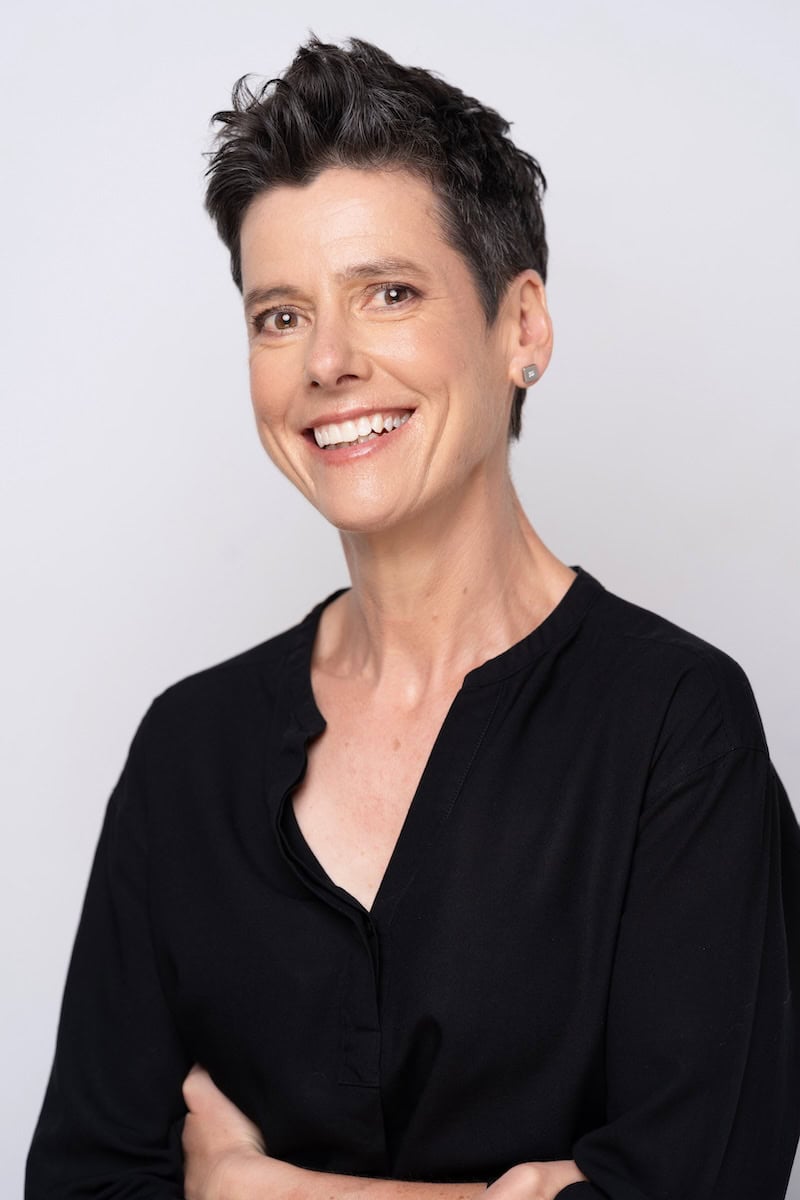
Sonja Betschart, Co-Founder of WeRobotics, holds Master’s degrees in Marketing and SME Management, and is trained in Design Thinking, Principled Negotiation, and Project Management. She received the 2024 Women in Tech Europe Award for Global Leadership and has been recognized as one of Switzerland’s 100 Digital Shapers in multiple years, before being inducted into their Hall of Fame in 2022.




Transcript
Jim Fruchterman
Welcome to Tech Matters, a biweekly podcast about digital technology and social entrepreneurship. I’m your host, Jim Fruchterman. Over the course of this series, I’ll be talking to some amazing social change leaders about how they’re using tech to help tackle the wicked problems of the world. We’ll also learn from them about what it means to be a tech social entrepreneur, how to build a great tech team, exit strategies, the ethical use of data, finding money, of course, and finally, making sure that when you’re designing software, you’re putting people first.
***
The Tech Matters podcast was originally created as a research project that was going to lead to a book, and the book is now here. It’s called “Technology for Good” from MIT Press, “How nonprofit leaders are using software and data to solve our most pressing social problems”. In the book, I profile more than 60 tech for good nonprofits using technology to make major social impact, and of course, many of the tech for good leaders I feature in the podcast are also featured in the book. So track it down at wherever your favorite eBooks or print books are sold, and you could also go to my website, Fruchterman.org, to find almost 10 different links. I hope you enjoy this episode of the Tech Matters podcast and that you get a chance to check out my new book.

***
When most people hear the word drone, they think military hardware and surveillance, something ominous buzzing overhead. Our guest today has spent more than a decade proving that drones could be used for something very different, a practical, locally-owned tool for social good. Sonja Betschart leads WeRobotics and the Flying Labs Network, a social franchise model that connects local experts in the global south with drone, data, and AI tools that they control themselves. A few things stood out for me in this conversation. First, WeRobotics made a very conscious choice not to build yet another piece of shiny tech, but to build on what already exists, partnering with hardware and software companies instead of duplicating them. Second, the Flying Labs Network is a concrete model of what decolonizing technology can look like. Flying Labs are locally-rooted organizations, nonprofits, companies, universities, even a government office. The network’s job is to connect them, help them learn from each other, and create south-to-south innovation. And finally, I was struck by their stance on data and AI. Most project data stays with the local partners because it’s sensitive and it’s theirs. That limits some AI possibilities, but also respects communities and keeps power closer to the ground. A very different approach from the typical hoover up everything and see what we can monetize, model of surveillance capitalism.
This is a story about technology that doesn’t come in as a savior, but as a tool in local hands. Let’s dive in. Welcome, Sonja.
Sonja Betschart [3:15]
Thank you, Jim. I’m happy to be here.
Jim [3:18]
Well, thank you. Well, I know our listeners are going to be excited to hear about your social enterprise, but let’s start with you. What brought you to running a nonprofit?
Sonja [3:29]
Yeah, that’s a really good question. So throughout my quite long career, my 30 plus year career, I’ve actually been spending more time in for profit than nonprofit, and with quite a number of time spent in tech startups. And I really love the startup space for its innovation side, for the ways the tech startups work, kind of the fast, intuitive, design thinking, lean, ecosystem driven kind of way of working. I really always loved that kind of working, but what I always missed was kind of a purpose.
It’s cool to be part of something new. It’s cool to create the new technology. But at the end of the day, it always felt like something was missing.
Jim [4:21]
Now, did you come up through the technology ranks, or the product ranks, or the MBA ranks? I mean, what sort of got you into tech, and then you wanted more?
Sonja [4:35]
Exactly. So I came up always through the business ranks. So I have mainly a business background, also have a tech background, but I also worked in between for nonprofits. And while I love the meeting part of it, I really struggled with kind of the traditional setup of nonprofits and kind of the not so innovative and very slow moving sector in many ways. That was not that open to trying out also new ways.
And so I had some really good experiences. So I got to be just before funding the robotics, I was actually setting up a philanthropy for a French business company that was active in nature conservation. So it is a small organization, a small foundation they set up, very locally driven. And that was a fantastic introduction to the, I think, you know, the nonprofit space. I’ve worked for a big nonprofit before, but that was not that meaningful as a, I would say, as a kind of an experience as this one, this one really gave me the opportunity to build up something from scratch too. And so working in the conservation sector, the one thing I really learned through the projects that we supported was, a lot of times, these very community based projects miss data. They miss data to make better decisions, they miss data to make a proof of their, you know, of their concepts. And it was frustrating to see that, especially when it came to geospatial data, we had access to almost nothing. So I, I left that experience with many really interesting, you know, kind of outcomes, but also that, that view that the sector definitely is missing access to potentially other ways of, you know, of seeing things that are out there.
Then luckily, so it was kind of a funny move, I came back home to my home country’s incident, and I got an offer to work for a new startup in the drone sector. So that was very early on in 2012. And the civilian drone sector started out a software company that looked for someone for their business development and marketing. And that’s how I got into drones. So I, you know, like before drones, I didn’t know much about drones. But then I went to meet with them. And they showed me that actually, you can create your own geospatial data with drones. I was blown away. I really felt like, oh my god, if only we would have had this technology three years ago in all of our projects, it would have made such a big difference.
Jim [7:22]
Wow, so you had just been funding local groups and seeing that they were missing this, then you get into a new business that’s starting drones and you go, wow, these are directly connected.
So how long did you work for the commercial drone startup?
Sonja [7:39]
So I worked for them for just over two and a half years, but what I did on the side, so like seeing that potential, I said, like, hmm, I think there’s something here. But it needs a bit of investigation to say, you know, how these two worlds can actually find themselves. Because also in 2012, and it’s kind of funny, because it’s full circle today again, when anyone talked about drones the first idea that came to people’s minds was military use, army use of drones, and they really did not have a great public image, I would say, when it comes to any kind of other publications that civilian drones would be used for. And so I decided to work for this organization or for this company at 80%, and trying to find out on the side with colleagues from a hardware drone company on how could these technologies possibly be used in the social sector, in the nonprofit sector. So we did this on our own, on our free days, on our vacation, and we would take our technologies, my colleagues, their hardware, me, our software, and we would try them out on different kind of nonprofit projects. So I instantly went back to all the organizations I was working with before and said like, hey, would you be interested to try this out? And we did so throughout a good two years where we kind of tried it out and said, what is feasible? What is not feasible? Where are the challenges? And quite quickly into that learning, it became evident that these kind of technologies really can add value to a lot of nonprofit organizations’ work, but that the way we did it, saying, you know, we take our technology, we travel somewhere, and we do a project, is not gonna be sustainable.
It’s good enough to make a Proof of Concept, but it’ll never go really far because it is not locally embedded. It’s not locally driven because we were coming in. And so that was a fantastic learning. So throughout these two and a half years of learning that, I did over 15 projects in the conservation sector. And at that point, it’s kind of, okay, what’s next? What could be the next step? And this was actually what led to WeRobotics. It was to say, you know, I think drones definitely can have a future in this sector. However, it needs to be done in a different way. How about we look at, you know, just creating a bridge between the ones who have the technology, the ones who produce the technology, and also know how to best use it with the ones on a local level who can use it, who can integrate it into the local projects, but not forcing the technology in them, but just kind of creating the needed ecosystem and the needed frameworks that local groups, local experts for whom drones are just a tool. If you’re a geospatial engineer, a drone is just a different tool to acquire your own geospatial data. So it’s not something very complicated either, because if I, as a business person, could learn how to fly a drone and acquire data in a week, a geospatial engineer can learn it in a day. So it’s really something quite easy to learn and to integrate. And this is how WeRobotics was born.
Jim [11:07]
Wow, so you had a chance, while working in the commercial industry, the drone industry, to test out different projects and then start thinking about, all right, this model of parachuting in from Europe may not be the most sustainable model and start thinking about how you would actually build it.
Before we go any further, you say geospatial data a lot. For our listeners, what kind of geospatial data were you doing back with those projects? In other words, what were they getting and what were the top couple of uses that they were making geospatial data? How is it actually helping make an impact?
Sonja [11:48]
So, one of my favorite ones actually is about mapping a whole atoll in the Seychelles that we did, where researchers work on both… so this atoll is an amazing breeding ground for both sharks and rays. And researchers missed a very detailed map of the atoll, first of all, to understand the atoll to see, you know, from satellite imagery was just not, we find enough to understand how this also changes over time and to have an extremely detailed map with high waters and with low waters to understand what does this environment look like and then built on that to say, okay, now for specific research projects, for example, for the shark research, how do they count sharks today?
They mostly take a boat, go out in the shallow water and count the sharks. So meaning when you have a boat, you’re going to disturb the water, you’re going to disturb the shark population there. So it becomes quite difficult to actually count and see, well, have I already counted this shark or do I count it again? So it’s mostly also small baby sharks, so they’re small and it’s not so easy to see how many I counted. So all of the counts are very approximate. At the same time, if you wanted to have additional info like how big is this baby shark, you would have to fish it out, measure it and put it in again. What you learn with the pilot project we did is if you then not only use the drones to get data off our map, but also fly at a very low altitude or a certain area and just take photos, these photos can be used by the researchers to actually count the number of sharks. So we flew at a very specific height of 40 meters, which meant that each pixel in the image would be one centimeter long. So it would allow to not only count the sharks, but then count the pixels to count the size of the shark.
Jim [13:50]
Wow. Wow.
So so basically you’re flying drones with cameras first at a higher altitude to map the island, the atoll, in more resolution and then you had this oh and and now we can actually count the sharks in a more reliable way that actually is more likely to capture more of the sharks and measure them all at a price that’s you know a tiny percent of what it would cost to do it with humans.
Sonja [14:18]
Exactly. That’s exactly it. So I did a lot of the conservation projects, but my colleagues created a little nonprofit association here in Switzerland with my colleagues from the hardware company. And while my heart was mainly in conservation, they started first projects in disasters, and one of my colleagues in one of the first disaster related projects in the Philippines, and I need to remember the dates, that was like 2013. So it was just about trying out how drones can help different sectors to potentially have more data or more reliable and timely and detailed data to support decision-making.
Jim [15:03]
So, in the Philippines, this would have been after typhoon using drone imagery to actually assess the damage and decide what was needed and where were the hardest hits areas, that kind of thing, right?
Okay. So now you’re starting WeRobotics and going, okay, to scale this up we need to build a different model. So let’s talk about that model. How does it work?
Sonja [15:29]
So what we tried out is to say, on the one hand side, we have local experts in the global south. How can we bring them together in a way that they can join our adventure from their point of view? And so he started out with a small proof of concept with three countries to understand how would that work? What would they be interested in? What type of support would they need from us? Would they need also technical support? Would it just be the connecting support? Are they interested in talking to each other, learning from each other? Yes or no? So we started with three countries just to figure out things a little bit. That took us two years.
Jim [16:12]
And what were those three countries?
Sonja [16:13]
The few countries were Tanzania, Peru, and Nepal.
Jim [16:17]
Wow, so what on each continent?
Sonja [16:19]
Exactly. That was the goal, to say let’s go on each continent and test out in one country just to understand. And understand what would be the use cases. For example, Peru was very interested in using drones for medical deliveries. They mostly focused on drone delivery projects in the Amazon. Nepal was very interested in using drones for mapping purposes. After earthquakes, after landslides, they did a number of landslide mapping projects with local nonprofit organizations. Their focus lay more there. Tanzania’s focus lay more on using drones for agriculture or for urban planning. They were more focusing on either agriculture or urban planning projects. That was nice because it gave us a diversity already of just use cases just with free hops. We call them Flying Labs. We wanted to give them a specific name and we called them Flying Labs. Throughout these two first years, I think we got about 15 countries interested in becoming a flying lab or 15 partners in 15 different countries to want to say, we want to start out a flying lab in our country. We were not ready for that. So they were like, okay, it’s good to see demand, but if you have to set them up as we did the first three, we’re not going to get very far and this is going to be a very slow process. This is where the idea then started to say, let’s create a network, but potentially with a different approach. We chose a social franchise approach to say, let’s implement a social franchise that allows existing local organizations who want to start the flying labs in their country to join the network.
Jim [18:13]
Wow. And so, so the idea of the scaling model is instead of you having an intense engagement in each country, which again is hard to scale, you develop the model that they could adopt and you’re helping them but in a much more lightweight way or how does that work?
Sonja [18:30]
Exactly. So for us, you join the Flying Labs Network on your own demand and you get access to a number of things. So in addition to creating that network, we created a partner ecosystem with hardware partners, software partners, platform partners, organizational partners that can then connect with the network to access their technologies, to access their knowledge and how to best use them to access certification, for example. So to build a network on the one hand side of the local experts and an ecosystem of partners on the other hand, which then makes up also our value proposition to Flying Labs.
So while a lot of first pilot projects for drones are kind of a test and trial way of seeing what works, then you can kind of build on other countries’ knowledge already, you can go much faster. So let’s say using drones for mapping mangroves. That is something that Fiji started early on. But this is something that Tanzania and India are also interested in. And then Panama showed an interest in the same kind of use case. So through the network, by being part of a larger group of like-minded professionals who want to do the same thing, you just can build on each other’s knowledge. For example, Fiji would then tell Tanzania and India Flying Labs, “We did this, it did not really work, we flew at this altitude, we had this kind of flight path. It really was difficult to process the data. So we understood that flying at this altitude with this kind of flight path would be way more optimal to have better resolution data”. So this allows now to [not] make the same mistakes again.
Jim [20:22]
So tell me more about like, what does a nascent flying lab look like? In other words, what are the skill sets of the people who are showing up that gets them sort of qualified or ready to join this network of people working on similar problems? What background do these people come from?
Sonja [20:41]
So mainly it’s, first of all, most importantly, it’s people, but it’s people part of an organization. So to join the Flying Labs Network, it’s built on existing companies and organizations. So it can be a nonprofit, it can be a for-profit, it can be a university, or the latest one that actually joined is a government office. So it’s, you need to be an existing kind of legal entity and made up of people.
So the skills needed, because Flying Labs are here to, how do they say, to create capacity in the country, to integrate drones and data and AI into work that is done in the country already. So you need to have a certain level of expertise already. You need to know how to fly your drones, you need to be certified. You will want to have data experience, and that is also a team effort. You know, you will have possibly some drone pilots, you will have the GIS experts, you will have someone who has possibly more experience with the analysis part. You potentially want to have someone in your flying lab who’s really good with stakeholder engagement too, because that’s a big part of the job also. So it’s a team made up of different skills, and you need to have a minimum level of skills on these elements already. And then the idea is that you can grow within the network, also use skills and expertise.
Jim [22:05]
So, in terms of the technology that’s coming, obviously, drones have become a big industry. Still, military is getting a lot of headlines, but there’s a full range of drones out there. So, what kind of technology is your organization and your network? What are you guys actually building that actually helps the use of drone technology for these social good applications?
Sonja [22:33]
So we decided quite early on not to build tech, but to actually build on existing technology. So that’s where the ecosystem makes a lot of sense. So we have existing drone hardware companies. In the ecosystem, we have software companies. So the idea is more on the application of drones than building drones in the country.
Sonja [22:56]
However, what a lot of countries are looking for is to be able to locally maintain. That is a big part of it. And more and more, as the industry really grows, there are some countries like, for example, India, who have fantastic local drone hardware companies. So for example, one of the Indian hardware drone companies is integral part of India Flying Labs.
Jim [23:21]
Okay. And I assume that the companies do that both for customers, but also because this showcases their technology in a really favorable way for society, right?
Sonja [23:33]
It does, but it’s also a business, I think. If you look at, for example, continents like Africa and Latin America, a lot of the investments today are around development. And so we focus on anything that focuses on one or several SDGs. And if you look, for example, at the African continent, potentially 80% of use cases are within an SDG range. Agriculture, again, urban development. So there’s so many applications that, for these both hardware and software companies, are a big part of the market that actually can be interesting to them. So this is where the collaboration, I think, and the partnership becomes interesting for our tech partners is to say, through the Flying Labs Network, they have vetted local experts who can introduce their technologies in the country, who can showcase for it, who can train on it, who can certify on it, and which expands their support, which expands also their reach in many countries where they wouldn’t be going to. And I think most of our tech partners, especially the early ones, have joined the partner ecosystem exactly for these reasons.
Jim [24:58]
Yeah. So let’s talk a little bit about the software. Are they using mainly commercial geospatial software products, are they using open source, a mix? How much do people trade software modules and apps across the network?
Sonja [25:14]
It’s definitely a mix. So some of our partners are commercial partners. But I think in any kind of nonprofit and social impact work, open source is really important too. So a lot of flying labs either have a close collaboration or are even hosted by universities. So there is also a very strong open source culture in universities. There is a lot of sharing of the sharing that happens within the network is mostly on workflows. It’s also on data processing workflows and analysis workflows just to support each other. And to openly share, I have used QGIS for that as in, this is the model I used. Or look, I just tried to develop a new algorithm here. You could try it out on your side. It’s that kind of sharing back and forth.
Jim [26:04]
So now you are collecting all of this data or at least the network is collecting all of this data and data is fodder for AI. So I have to ask the AI question is, how is all this sort of image and sensor data actually feeding into AI and what’s happening today and what do you think might happen tomorrow?
Sonja [26:25]
That’s a really fitting question we actually get asked a lot. So what we also learned early on in our process with Flying Labs is that as they work for local governments, they work for local community organizations, the data stays at that level. So some of them make their data openly accessible. Many of them don’t, because the data is too sensitive in many ways to host on an open platform. So a lot of the actual collected data stays in the hands of whoever that project was done with. So we don’t sit on a ton of data, actually, that can be used for AI, which is, on the one hand, a limitation, but on the other hand also respects, I think, the local clients of the Flying Labs to be in full control of the data.
Jim [27:19]
Yeah. So, and of course, you know, we’re working on something called the better deal for data about how you could share sensitive data, not as open data, but but amongst people who have a common sort of social objective.
But so are people using AI at the sort of smaller scale, like inside, you know, I mean, for example, sharks, you know, you could probably do an AI thing for automatically counting and measuring sharks. Are people doing stuff like that?
Sonja [27:48]
They do. And I think that’s where there’s a lot of sharing within the network. And we also share with other organizations, there’s outreach from other organizations and say, you know, we want to try to build an AI algorithm, would you have some data that you can share with us. So this inter I would say, inter-sector sharing definitely happens. It’s just more on a, on a, how to say on like a one-to-one kind of base and not us hosting a platform of open data where anyone can tap into.
Jim [28:17]
Yeah, and obviously over the last dozen years, satellite imagery and satellite sensing has gotten better. It’s also often been very expensive, but do you see kind of a use of, oh, we’ll use satellite data for this layer and then we’re going to, but in these important areas, we’re gonna fly drones because it’s really important to get more detailed information. Are people doing that kind of mix and match of different sort of data.
Sonja [28:46]
Actually, a lot, because one of the challenges or the restraints of drones is the size that you can map. So it’s really effective for smaller sizes, but for big areas, it’s just not effective.
And drones really come with a linear cost, so like one hectare, like two hectares, maybe the price of one hectare times two, possibly not at that range, but it has a linear cost that stays kind of the same. So, there always is going to be interaction with other data sources, other geospatial data sources like satellite data. What has been tried out quite many times on different projects also is to start using drone data to ground-proof satellite data. So that is something that actually works quite nicely.
To drones, you do these patches, for example, for biodiversity. You will not be able to map full-forested drones, but you could map parts of it and then use these plots as your ground-proofing plots to train satellite data to recognize different plants.
Jim [29:55]
Yeah, no, that makes a lot of sense. So how are you funded, especially in a year where global development has taken a few hits on the financing side?
Sonja [30:07]
Yeah, so we always put a strong focus on staying small. So we have been 12 people for a long time now. And the idea is not to grow extensively beyond that. And this is where we heavily rely on our partner ecosystem choice to say, whatever we can outsource, we outsource. Again, why would we concentrate, for example, on building algorithms ourselves when there’s a lot of other organizations out there who already do that, we just can partner with them. And this way, one of our underlying principles is really to build on existing tech, but also existing other organizations and not replicate what they do, but then enter a partnership and say, hey, we are really good at that. However, there’s a strong interest for that part. Would you be open to partner with us? That allowed us to stay small with a quite nimble budget for what we have. We still, a good 50% of our financing is still through grants and donations. So that’s where we still have quite a strong dependency on, I would say, on the more traditional funding sector.
And then the other 50%, then depending on years, it’s a bit more than that, is through in-kind and pro bono. That comes a lot from our partner ecosystem. So it’s not just in-kind tech and in-kind for certification or for training, but also pro bono services from bigger organizations who can take on paths instead of us hiring more staff for specific projects. So that is about, depending on years, between 30% and 40% of our income. And then that leaves the rest that we’re building out also for consulting. So the rest is consulting revenue, consulting for other nonprofit organizations, consulting for some governments on specific frameworks. And this is really a part that we are striving to build out together with the Flying Labs because we’re sitting on a lot of knowledge. We’re sitting on a lot of connections also. And so to do collaborative projects or to consult is actually a really interesting income stream for us.
Jim [32:26]
Yeah, and obviously some organizations have the ability to pay for that expertise, and so you should tap them to support that.
So in terms of what you’ve learned or observed that you think apply more broadly to other tech-for-good social enterprises, so are there things about government relations or this social franchise model?
Sonja [32:53]
I think possibly the two or three most generalizable ideas would be what I kind of said before is build on the existing. I think this is something our sector still struggles sometimes a bit. It’s to do things over and over again. There’s so many amazing existing initiatives and tech out there already. Like Tech Matters, look at what you do, Jim. You create a lot of really useful tools. Why would we want to focus on rebuilding some of these things if it’s just been done? We are really good at applying. Others are really good at building. Let’s come together. Let’s do things together.
Jim [33:34]
Yeah, I think, I think, you know, the secret in tech is often to start with a technology stack, you know a set of technology you’re building on top of, that’s 98% done and you focus on the 2% most cool secret sauce that’s unique to you. But I think our sector often starts much further down and starts with 50% of the technology done. And it’s really hard to build all those pieces. And I do agree, there’s no need to replicate something that someone’s already doing in the social sector. Because, you know, being 5% better than the incumbent is just not worth the effort.
Well, cool. So what else do you want to share?
Sonja [34:13]
So I think that is definitely something, the replication, you know, fact, and building on the existing. And then something that we really keep on loving and learning with the Flying Labs Network is a whole south-to-south innovation, is to really open it. There’s so many fantastic ideas in the South. And they will be small initiatives, but learning through a small initiative and building on that somewhere else on the planet and then doing this collaboratively together, I think there’s a lot of fantastic opportunities out there that are not harvested by some of the more traditional actors, because they don’t look so strongly at the self-to-self factor.
I think for us in the beginning, we created a lot of the resources for the Flying Labs Network. Today, the majority of the resources are created by Flying Labs.
Jim [35:13]
Wow. And I think this is really a value of an international organization like yours, is not to actually be the innovators. It’s to create the network so that those innovations can spread. Because if someone in Tanzania invents something really cool, well, they’re probably not going to show up in Peru and share that with people. But you know both those relationships and go, oh, you need to check out what the Tanzanians did or whatever it might be.
Sonja [35:41]
And there is a lot of innovation out there. My colleagues, I met with my colleagues from India not so long ago, and they shared about having innovated on quite an easy way to put the pouch on a drone to get better air samples, air quality samples. So which, before we had drones, is really complicated because you have the rotors. They kind of disturbed also the air. So they found a new way. And just recently, this week, someone was asking about that in Africa and I told them, talk to India Flying Labs. They just tried this out. They’re still in the kind of early stages, but it seems to work quite well. Talk to them.
Sonja [36:22]
Or Mexico, who shared with us that they’re working on a really cool new way of calculating biomass. They have drones and LIDAR. And so I already shared this example, I think, with three or four other flying labs who were talking about, there’s a strong interest in our countries for biomass calculations. Well, talk to your colleagues in Mexico. They’re trialing out a really cool new workflow, and they’re super happy to share.
Jim [36:51]
Yeah, I think that’s something people miss is that people are really happy to share because the goal is social change. It’s not profit where being proprietary somehow advances your interests. And I think people are surprised to hear that so many people are generous in that way, especially when they’ve created something really innovative.
Sonja [37:11]
Exactly. And I think that’s what you see in the flying arts sector. I think that a lot of the joy comes actually from sharing with others. And because your innovation can go quite far.
Jim [37:24]
Well, so, so as as we wrap up, do you have any advice for people who are entering the field following your path from money to meaning, from being a commercial business leader to starting a nonprofit that has scaled up over the last, you know, more than a decade. So what advice do you have to share?
Sonja [37:44]
Huh, that’s a difficult question because I think all of us need to make our own learnings too. But the one advice that I possibly would give is focus on value. That’s a learning we’ve been made along our journey too, is all our work is based on strong value propositions. And these value propositions also change over time as needs change, but we keep an extremely strong focus on creating value, for who we create value. And this is kind of our North Star.
And this way we stay aligned and it also forces us to listen. It forces us to pause and reflect, you know, are we still in a good journey? Are we still providing value? So for example, the network set up is it’s the yearly renewal. So each year Flying Labs can choose not to renew and not to stay in the network. And if they don’t, it’s also a sign that we don’t provide the value that they’re possibly looking for. It’s not an easy path, you know, it asks for sometimes doing things you don’t want to do. Like we had an example like this, Flying Lab told us a few years ago, we need support for regulations work. And my feedback was to say, I do not want to get into regulations. It’s not something I’m interested in. It’s not something I’m good at. It’s not something that we actually have capacity within our Flying Lab, our WeRobotics team. But at the end of the day, we had to do it because it was an expressed need. Our role is to provide value to Flying Labs. And we actually came up with something quite cool along the way.
Jim [39:25]
Yeah, no, quite a number of social entrepreneurs who’d rather be working on creating value and product are reluctant to engage in work like standards and government regulation. And yet, you look around and you say, well, who’s going to do it? And if no one else has that ability to step into the gap, you go, well, this just might be the most important thing for us to work on in the field, even though I don’t know anything about this, I know about all these other things.
Well, on that note, I think that creating value advice is great guidance. Sonja I want to thank you for helping us understand your journey, your social franchise model around how to bring the benefits of drones and what drones can do to so many different parts of the social sector in 40 plus countries. So thank you.
Sonja [40:13]
Thank you so much, Jim. This has been a pleasure.
Jim [40:18]
That was a really rich tour of what happens when you take a technology that’s often associated with harm and flip the script. Not by pretending the risks don’t exist, but by designing everything around local value, local control, and local expertise.
If this conversation resonated with you, please follow or subscribe to Tech Matters on Apple Podcasts, Spotify, Castbox, or wherever you’re listening right now. And if you’d like to share your thoughts with us, or suggest future guests, write to us at [email protected]. I also want to acknowledge the support of generous donors who support Tech Matters the organization and Tech Matters the podcast, especially Okta for Good. I’m your host, Jim Fruchterman. Thanks for listening.